

Silverback Tempered Glass
Tempered safety glass is a type of glass that has been treated through a process of thermal or chemical tempering to enhance its strength and safety characteristics. This process involves heating the glass to a high temperature and then rapidly cooling it, which creates compressive stresses on the surface while the interior remains in tension. As a result, tempered glass is significantly stronger than regular glass of the same thickness, making it resistant to breakage under impact. When tempered glass does break, it fractures into small, relatively harmless pieces instead of sharp shards, significantly reducing the risk of injury. These properties make tempered safety glass ideal for applications where safety is paramount, such as in shower enclosures, furniture, and architectural installations where strength and protection against accidental breakage are essential considerations.
Advantages of Tempered Safety Glass
Strength:
Tempered glass is much stronger than regular glass. It undergoes a special heating and rapid cooling process that makes it up to four to five times stronger than standard glass of the same thickness. This makes it more resistant to impact and bending forces.
Heat Resistance:
Tempered glass can withstand higher temperatures than regular glass. This makes it suitable for use in applications where it may be exposed to heat, such as oven doors, fireplace screens, and cookware.
Safety:
When tempered glass breaks, it shatters into small, relatively harmless pieces instead of sharp shards like regular glass. This reduces the risk of injury in case of breakage, making it safer for use in areas where accidents are more likely, such as in doors, shower enclosures, and car windows.
Durability:
Due to its increased strength and resistance to breakage, tempered glass is more durable and long-lasting than regular glass. It is less prone to scratches, chips, and other forms of damage, making it ideal for use in high-traffic areas or applications where frequent cleaning is required.
Flexibility:
Tempered glass can be used in a variety of applications and environments due to its versatility and strength. It can be custom-cut to fit specific dimensions and shapes, making it suitable for use in architectural features, furniture, and electronic devices.
Overall, tempered glass offers improved safety, durability, and versatility compared to regular glass, making it a popular choice for a wide range of applications.
Uses of Tempered Safety Glass
Construction and Architecture:
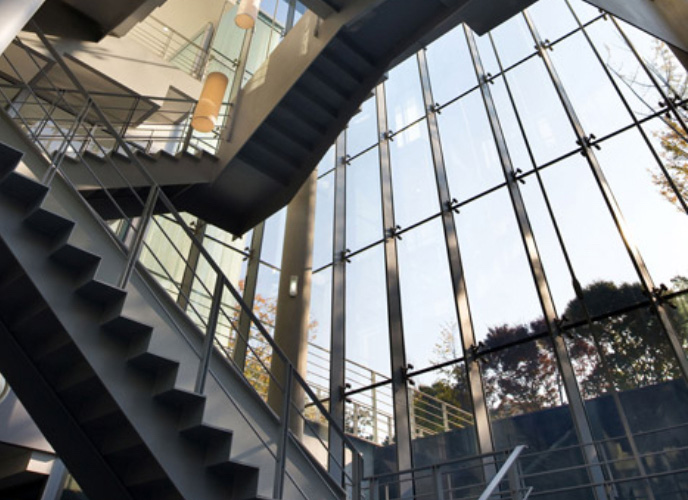
- Tempered glass is used for windows, doors, glass facades, and structural glazing in buildings to enhance safety and durability.
- Tempered-Laminated glass is utilized for skylights, glass canopies, and balustrades to provide both safety and aesthetic appeal.
- Both tempered and tempered-laminated glass are used for hurricane-resistant windows and building envelopes in areas prone to severe weather conditions.
Furniture Industry:
- Tempered glass is used for tabletops, shelves, and cabinet doors in furniture to provide strength and safety.
- Tempered-Laminated glass may be used for furniture applications where enhanced safety and resistance to breakage are desired, such as glass tabletops in public spaces or commercial settings.

Retail and Commercial Displays:
- Tempered glass is commonly used for display cases, shelving units, and countertops in retail environments for its durability and safety.
- Tempered-Laminated glass is utilized for large-scale display installations or where additional safety features are required, such as glass partitions or dividers in commercial spaces.

Hospitality and Leisure:
- Tempered glass is used for decorative elements, room dividers, and glass doors in hotels, restaurants, and recreational facilities.
- Tempered-Laminated glass may be employed for safety-critical applications such as glass floors, pool fencing, or balustrades in high-traffic areas.

Safety and Security Applications:
- Both tempered and tempered-laminated glass are used in safety and security applications such as bullet-resistant glazing, ATM enclosures, and security doors.